

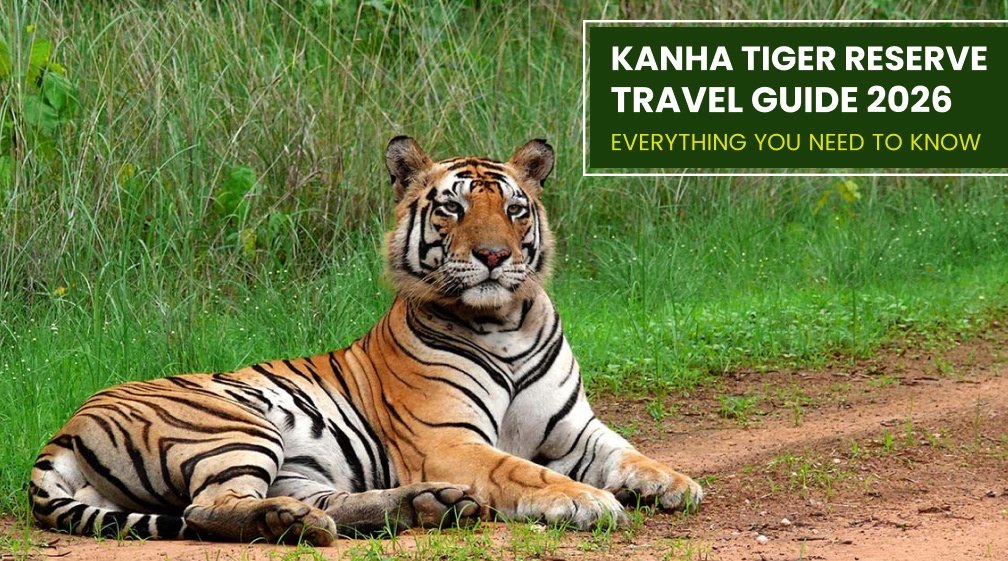
Kanha Tiger Reserve Travel Guide 2026 is your starting point for planning an unforgettable wildlife holiday in Madhya Pradesh, India. Famous for its Bengal tigers, hard-ground barasingha, sal forests and beautiful open meadows, Kanha offers one of India’s most rewarding wildlife experiences. Whether you are visiting for a jungle safari, birdwatching, nature photography or a peaceful forest retreat, understanding the safari zones, entry gates, best visiting season and accommodation options will help you plan your trip better.
Kanha Safari Timings and Booking Rules for 2026
Kanha National Park offers morning and evening jeep safaris. Timings vary seasonally depending on sunrise and sunset.
2026 Kanha Safari Timings (effective 1 October 2026):
|
Months |
Morning Safari |
Evening Safari |
|---|---|---|
|
October–November |
6:00 AM–11:30 AM |
3:00–6:00 PM |
|
December–January |
6:20–11:30 AM |
3:00–6:00 PM |
|
February–March |
6:10–11:30 AM |
3:00–6:30 PM |
|
April–June |
5:30–11:00 AM |
3:30–7:00 PM |
Important booking rules:
-
Book safari permits through the official MP Forest Department portal.
-
Select your preferred safari date, zone and entry gate.
-
Advance booking is recommended, especially during peak tourist season.
-
Carry the original valid photo ID used for the booking.
-
Visitors must follow park regulations and be accompanied by an authorised guide.
-
Safari permits are subject to availability and park rules.
Note: Timings and booking conditions may change. Always verify the latest details on the official portal before travelling
1. About Kanha Tiger Reserve
Kanha Tiger Reserve, located in Madhya Pradesh, is one of India’s well-known wildlife conservation landscapes. Established as a national park in 1955, it later became part of Project Tiger in 1973. The reserve is recognised for its diverse forest ecosystems, including sal forests, bamboo vegetation, open grasslands and water bodies. It is particularly important for the conservation of the hard-ground Barasingha, also known as the swamp deer. Kanha is also home to Bengal tigers, leopards, Indian gaur, sloth bears, wild dogs, spotted deer, sambar and numerous bird species. Its combination of wildlife, landscapes and conservation efforts makes it a popular destination for wildlife enthusiasts and nature photographers.

Bengal Tiger being photographed by tourists in Kanha Tiger Reserve

2. Why Visit Kanha Tiger Reserve?
Kanha offers more than just the opportunity to see a tiger. Its varied habitats support a remarkable range of wildlife and provide visitors with an opportunity to understand India’s forest ecosystems.
Some reasons to visit include:
-
Bengal Tigers: Experience the natural habitat of one of India’s most iconic wild animals.
-
Hard-Ground Barasingha: Observe the rare deer species closely associated with Kanha’s conservation history.
-
Beautiful Forest Landscapes: Explore sal forests, bamboo patches, open meadows and seasonal streams.
-
Birdwatching: Discover resident and migratory birds across different habitats.
-
Nature and Conservation Experiences: Learn about local biodiversity and the importance of protecting wildlife habitats.
3. Kanha National Park Safari Zones and Entry Gates
Kanha Tiger Reserve has four main tourism zones in its core area: Kanha, Kisli, Mukki and Sarhi. It also offers safari experiences in designated buffer areas.
Each zone has its own landscapes and wildlife habitats. Safari entry arrangements depend on the zone, permit and selected gate.
Kanha Zone
Kanha Zone is known for its expansive grasslands, forest landscapes and wildlife diversity. Its open meadows provide opportunities to observe herbivores and other wildlife in their natural habitat.
Kisli Zone
Kisli offers a combination of forest tracks, grasslands and varied vegetation. It is a popular choice for visitors interested in exploring Kanha’s biodiversity and natural landscapes.
Mukki Zone
Mukki is an important safari entry point on the southern side of the reserve. It provides access to the Mukki tourism zone and is particularly convenient for visitors staying near Mukki Gate.
Sarhi Zone
Sarhi is another core tourism zone, offering a quieter forest experience with varied vegetation and opportunities to explore the reserve’s wildlife habitats.
Buffer Zone Safaris
Kanha also has designated buffer tourism areas, including Khatia, Khapa, Sijhora and Phen. These areas provide additional opportunities to experience the forest and observe wildlife outside the core tourism zones.
Important: Safari access, entry gates, vehicle availability and permitted timings depend on park regulations. Always check the latest official information before booking.
4. Types of Safari Experiences in Kanha
Jeep Safari
The jeep safari is the principal wildlife tourism experience in Kanha Tiger Reserve. Visitors explore designated safari routes in authorised vehicles accompanied by a registered guide.
A safari offers opportunities to observe tigers, leopards, barasingha, gaur, deer, birds and other wildlife. However, wildlife sightings are never guaranteed because animals move freely within their natural habitats.
Buffer Zone Safari
Buffer zone safaris allow visitors to explore designated forest areas outside the core tourism zones. They offer an alternative for travellers who want to experience Kanha’s biodiversity and landscapes.
Safari availability and operating schedules should be confirmed through official booking channels.
5. Best Time to Visit Kanha Tiger Reserve
Kanha Tiger Reserve is generally a seasonal wildlife tourism destination, with core-zone tourism operating during the designated safari season. Core-zone safaris typically remain closed during the monsoon period, while buffer-zone arrangements may differ.
The best time to visit depends on your interests and the kind of experience you prefer.
October to February: Enjoy the Winter Forest
The post-monsoon and winter months bring pleasant weather and refreshed forest landscapes. The greenery, comfortable temperatures and beautiful morning light make this period attractive for wildlife photography, birdwatching and nature experiences.
March to June: Summer Wildlife Experiences
Summer is popular among wildlife enthusiasts because water availability and vegetation conditions can influence animal movement. Visitors may have opportunities to observe wildlife around water sources and open areas.
Temperatures can be high, so appropriate clothing, hydration and preparation are important.
July to September: Monsoon Season
The core safari zones generally remain closed during the monsoon period. This seasonal break supports the forest ecosystem and allows visitors to plan their next safari once tourism operations reopen.
Always verify the current year’s opening and closing dates with the reserve authorities before finalising travel plans.
6. Wildlife You Can Spot in Kanha
Kanha is home to a wide variety of mammals, birds and other wildlife.
Bengal Tiger
The Bengal tiger is one of the major attractions of Kanha. Observing this magnificent predator in its natural habitat is a memorable experience, although sightings depend on animal movement and chance.
Barasingha – The Pride of Kanha
The hard-ground barasingha is among the most significant wildlife species associated with Kanha. Conservation efforts in the reserve have played an important role in protecting this distinctive deer.

Indian Gaur
The Indian gaur, also known as the Indian bison, is one of the largest wild cattle species. These impressive animals can often be seen grazing in forest clearings and grasslands.
Leopard
Leopards are elusive predators that inhabit the reserve’s forest landscapes. They are generally more difficult to observe because of their secretive behaviour.
Other Wildlife
Other animals found in Kanha include:
-
Sloth bears
-
Indian wild dogs (dholes)
-
Sambar deer
-
Spotted deer (chital)
-
Wild boars
-
Jackals
-
Various species of monkeys
7. Birdwatching in Kanha National Park
Kanha is an interesting destination for birdwatchers and nature photographers. Its forests, grasslands and water bodies support a variety of resident and seasonal bird species.
Visitors may encounter birds such as Indian rollers, crested serpent eagles, peafowl, kingfishers, woodpeckers and other forest birds.
For a better birdwatching experience, carry binoculars, maintain silence and observe birds without disturbing their natural behaviour.
Explore: Birds or Kanha
8. Where to Stay Near Kanha Tiger Reserve?
Choosing the right accommodation is an important part of planning a Kanha wildlife holiday. Travellers should consider the safari entry gate, travel time, accommodation facilities, natural surroundings and available experiences before booking.
Accommodation options range from budget-friendly stays to luxury jungle lodges.
Luxury Jungle Lodges
Luxury jungle lodges offer comfortable accommodation alongside opportunities to experience the surrounding forest landscape.
Singinawa Jungle Lodge is located in the Kanha landscape near Mukki Gate. Set within approximately 52 acres of forest land adjoining the Kanha Tiger Reserve, the lodge combines comfortable hospitality with opportunities to connect with nature.
Guests can explore the lodge’s accommodation, nature-based experiences, birdwatching opportunities and conservation initiatives while planning their Kanha holiday.

Singinawa Jungle Lodge, an eco-friendly yet luxurious lodge situated in Kanha Tiger Reserve
Discover more about Singinawa Jungle Lodge and its experiences.
Mid-Range and Budget Accommodation
Travellers looking for more economical options can explore hotels, resorts, guesthouses and other accommodation near the reserve’s entry gates.
Compare location, facilities, guest reviews and transport arrangements before making a reservation.
9. Essential Tips for Planning a Kanha Jungle Safari
A little preparation can make your wildlife holiday more comfortable.
-
Book Safari Permits Early: Popular safari dates and zones can have limited availability. Check official booking channels in advance.
-
Choose Your Entry Gate Carefully: Consider your accommodation location and preferred safari zone before selecting an entry gate.
-
Wear Neutral-Coloured Clothing: Choose comfortable shades such as olive green, brown, beige and khaki.
-
Carry Binoculars: Binoculars can improve your wildlife and birdwatching experience.
-
Dress for the Season: Carry warm layers during winter and lightweight, breathable clothing during summer.
-
Follow Park Rules: Maintain silence, stay inside authorised safari vehicles and never feed or disturb wildlife.
-
Respect Nature: Avoid littering and follow the instructions of your guide and park authorities.
Kanha Tiger Reserve Travel Guide 2026: Safari Booking, Zones & Travel Tips
Planning a wildlife holiday in 2026? This Kanha Tiger Reserve Travel Guide covers everything you need before visiting one of India’s most famous tiger reserves. Find the latest information on Kanha safari booking, core and buffer zones, entry gates, seasonal safari timings, permit availability, wildlife experiences and accommodation near Mukki Gate. Whether you are planning your first tiger safari, looking for the best time to spot wildlife or choosing a comfortable jungle lodge, this guide will help you organise your Kanha trip with practical travel advice and essential visitor information. Check the latest forest department updates before travelling, as safari timings, permit availability and entry regulations can change.
Frequently Asked Questions About Kanha Tiger Reserve
1. Where is Kanha Tiger Reserve located?
Kanha Tiger Reserve is located in Madhya Pradesh, India, across parts of Mandla and Balaghat districts.
2. What is the best time to visit Kanha National Park?
October to February is popular for pleasant weather and post-monsoon landscapes. March to June is also attractive for wildlife enthusiasts because changing vegetation and water availability can influence animal movement.
3. How many safari zones are there in Kanha?
Kanha has four main core tourism zones: Kanha, Kisli, Mukki and Sarhi. It also has designated buffer tourism areas.
4. How can I book a Kanha jungle safari?
Visitors can check safari permits and availability through the official Madhya Pradesh forest booking portal. It is advisable to plan and book in advance, particularly during popular travel periods.
5. Can I see tigers during a Kanha safari?
Kanha is known for its Bengal tiger population, but sightings are not guaranteed. Wildlife moves freely through the reserve, and every safari can offer a different experience.
6. Is Mukki Gate a good entry point for Kanha?
Mukki is an important entry point for the reserve’s Mukki tourism zone. It is particularly convenient for visitors staying in the Mukki area. Select your gate based on your permitted safari zone and booking arrangements.
7. What other animals can I see in Kanha?
Apart from tigers, visitors may encounter barasingha, Indian gaur, leopards, sloth bears, wild dogs, sambar, spotted deer and several bird species.
8. Are there luxury jungle lodges near Kanha Tiger Reserve?
Yes. Singinawa Jungle Lodge is one accommodation option in the Kanha landscape near Mukki Gate. Visitors can explore its accommodation and nature-based experiences when planning their stay.
9. How many days are enough for a Kanha trip?
A two- to three-night stay is a useful starting point for planning a wildlife holiday. The ideal duration depends on the number of safaris, travel arrangements and other experiences you wish to include.
Plan Your Kanha Wildlife Holiday with Singinawa Jungle Lodge
Kanha Tiger Reserve offers an opportunity to experience India’s remarkable wildlife, beautiful forests and conservation heritage. From exploring different safari zones to observing barasingha and birdlife, every visit can bring a new perspective on the natural world.
For travellers looking for a comfortable forest retreat near Mukki Gate, Singinawa Jungle Lodge offers a setting to slow down, reconnect with nature and make the most of their Kanha holiday.
Explore Singinawa Jungle Lodge and start planning your wildlife getaway.